
Public Policy
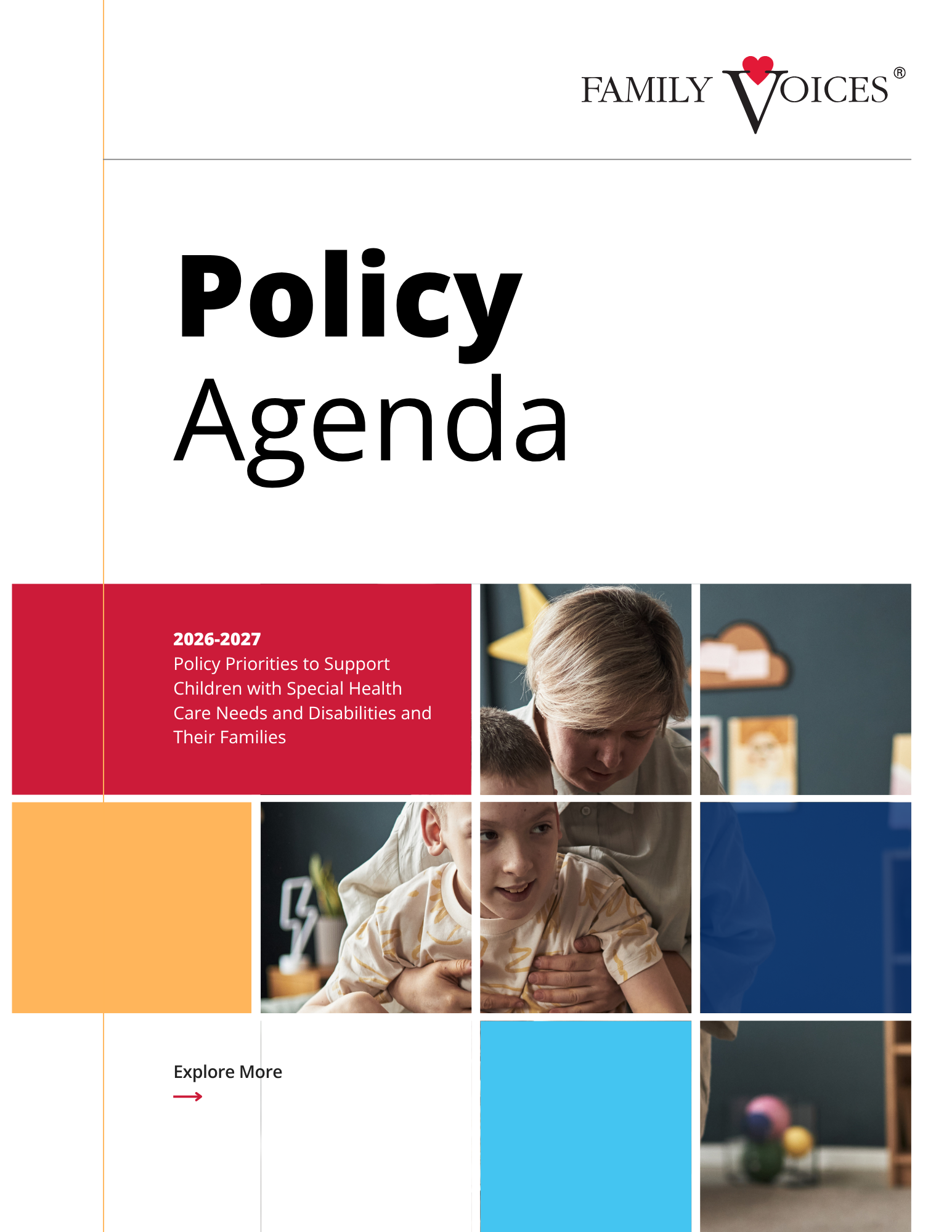
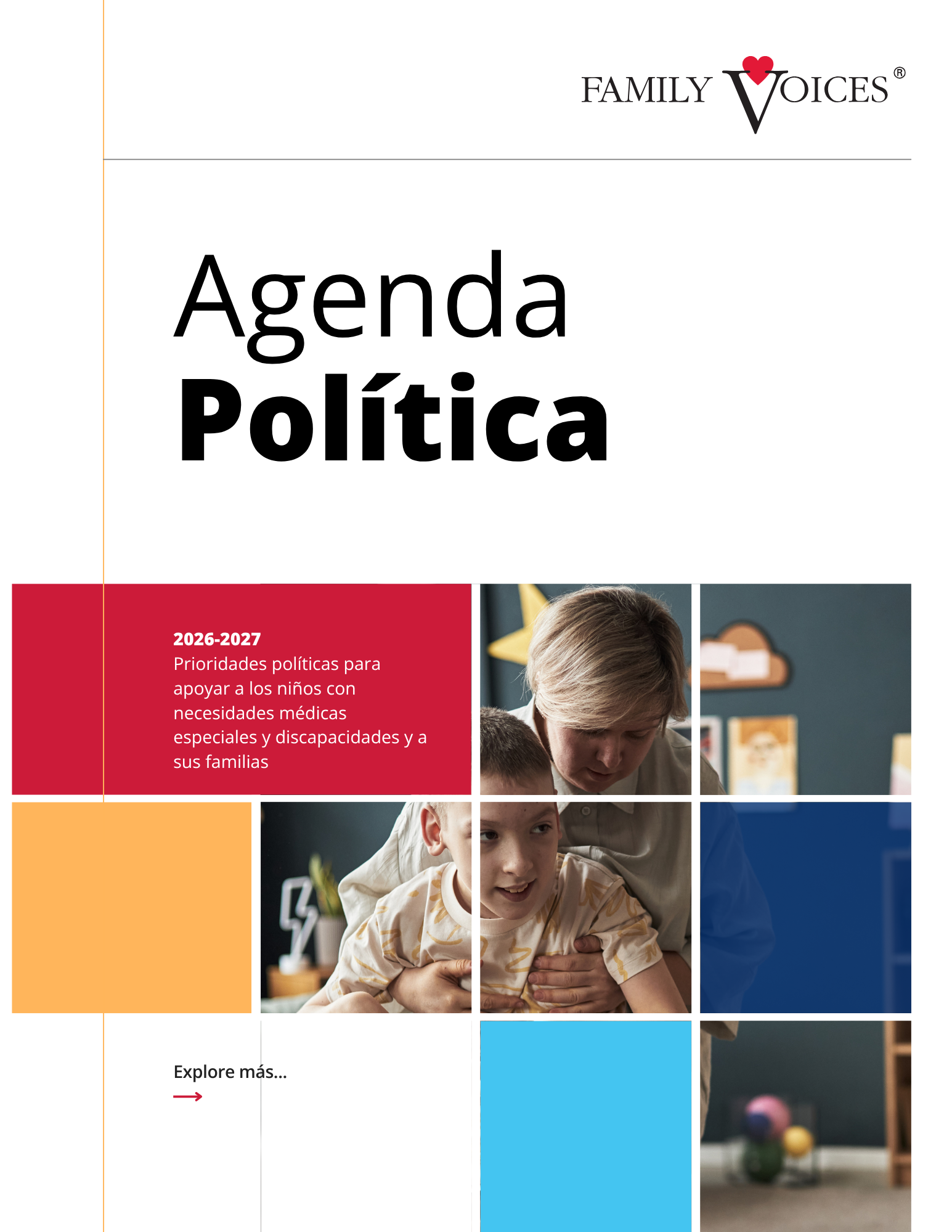
Policy Priorities to Support Children with Special Health Care Needs and Disabilities and Their Families
Our Strategic Policy Priorities
Family Voices continues to advocate for programs and policies that best serve children and youth with special health care needs and disabilities. Our objective is to develop policy and legislation with full family engagement and improve systems of care for CYSHCN and their families.
We continue to support youth and family leaders so they can advance policy priorities that bring us closer to our organizational vision that all children, youth, and families, especially those with special health care needs and disabilities, experience their best health and quality of life. Our 2026-2027 policy priorities were refined in collaboration with family and youth leaders.
Our 2026-27 policy agenda includes:
- Expand access to peer-to-peer support for families of children and youth with special health care needs
- Support Medicaid coverage for children and youth with special health care needs and their families and caregivers
- Improve the transition to adult health care for youth and young adults with disabilities and their caregivers and families
- Eliminate language access barriers
Family Voices collaborates with national child health and disability organizations, such as the Consortium for Citizens with Disabilities, The Arc, Autism Speaks, the American Academy of Pediatrics, and other groups.
Recent Policy Statements

Family Voices supports home- and community-based services for children and adults with special health care needs and disabilities.
Recent Policy Briefs
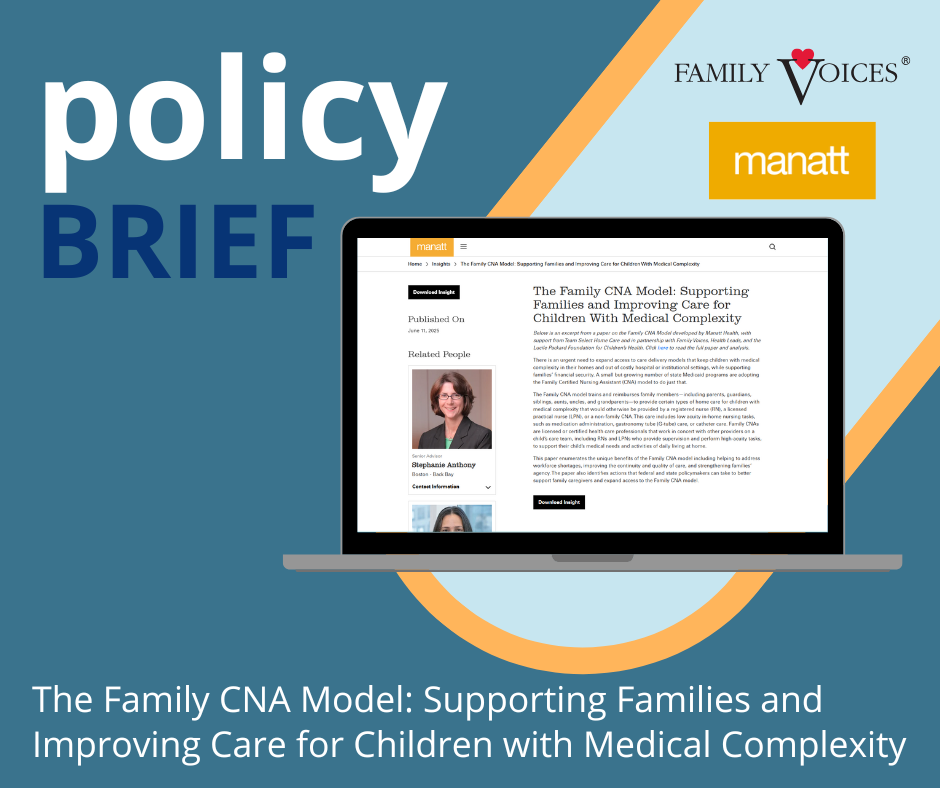
The Family CNA Model: Supporting Families and Improving Care for Children with Medical Complexity
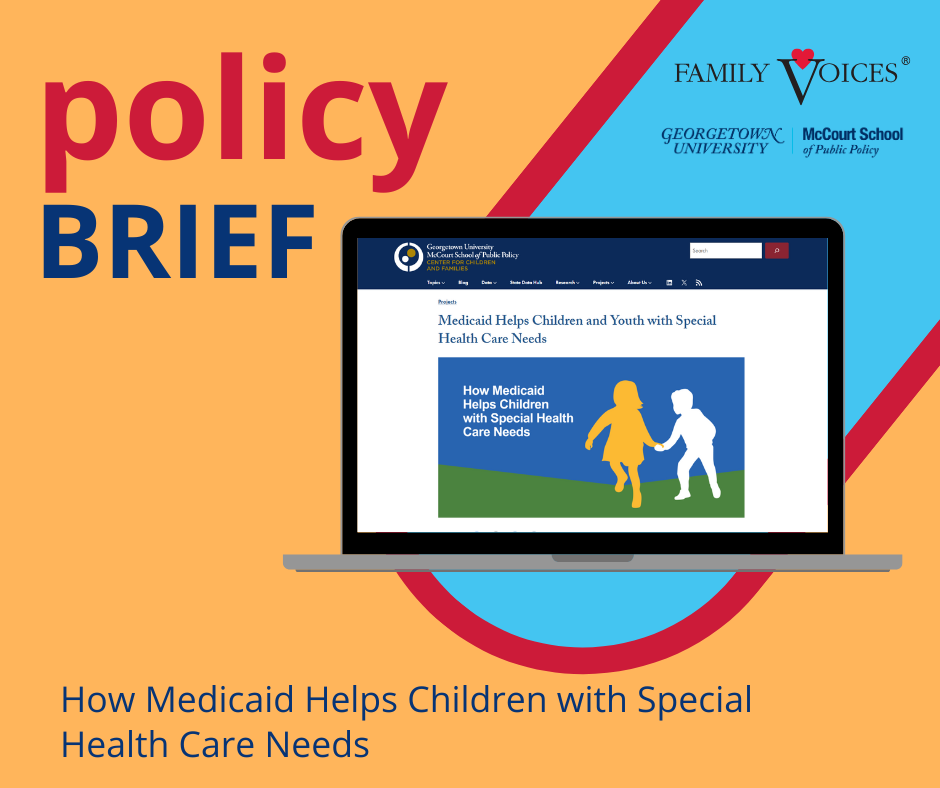
How Medicaid Helps Children with Special Health Care Needs
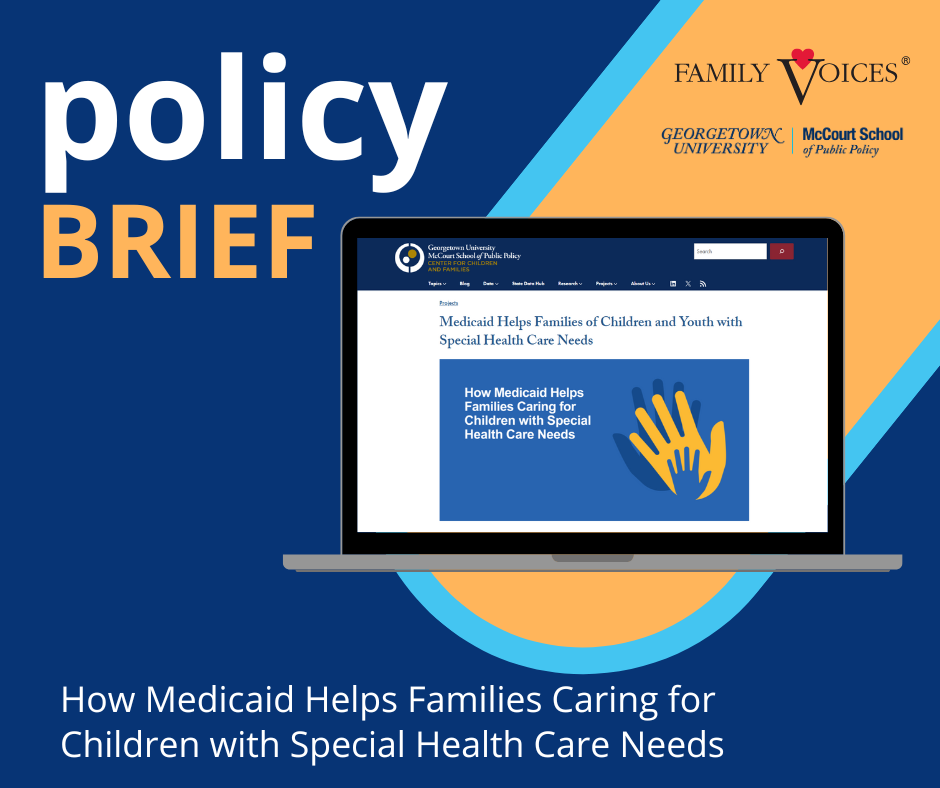
How Medicaid Helps Families Caring for Children with Special Health Care Needs
Recent Policy-Related News
Other News, Information, and Resources (Washington Update, January 30, 2019)
From the Administration on Community Living (ACL): Learn more about ACL's Business Acumen Initiative. Medicaid, Medicare, Accountable Care Organizations, private insurers, and other private pay models offer opportunities for community-based organizations to tap into...
Your Input Sought/Of Possible Interest (Washington Update, January 30, 2019)
YOUR INPUT SOUGHT NEW Pain Management Task Force Draft Report – Due April 1, 2019 The Comprehensive Addiction and Recovery Act of 2016 (CARA), requires that the public be given at least ninety (90) days to submit comments on any proposed updates and recommendations...
Webinars from the Field (Washington Update, January 19, 2019)
Integrating Nurses into Complex Care Teams Thursday, January 17, 1:00 pm ET Better Care Playbook NEW CLC Peer Learning Exchange: Building Health Equity in Systems of Care by Engaging Diverse Families, Youth, and Community Organizations Thursday, January 17, 2:00-3:00...
The “Shut-Down” (Washington Update, January 19, 2019)
As most readers probably know, a partial government “shut-down” has been caused by a stand-off between congressional Democrats and President Trump over whether to fund a “wall” on the nation’s southern border. At this point, it is not clear how or when the situation...
Maternal and Child Health Bureau Announces Phase 1 Winners of the Challenge
Maternal and Child Health Bureau Announces Phase 1 Winners of the Challenge The Maternal and Child Health Bureau has selected 7 winners from Phase 1 of the Care Coordination for Children with Special Health Care Needs Challenge. Each Phase 1 winner was awarded a share...
Legislation
The legislation tracked below is for informational purposes only. It is not meant to be an endorsement for or against the legislation. Action updates may occur daily, if actions are taken by Congress. Newly introduced legislation will be added weekly.
The legislative tracker is sorted by latest action. To navigate this page, you can scroll through just as you would a normal webpage. You can also click Ctrl+F on your keyboard and type in the search box.
For additional information and to read the full text (if available), click the highlighted bill number. You can also navigate to Congress.gov and search using key terms or phrases, or the bill numbers listed below.